
The Chair That Ruined My Life
(And Other Lies We Tell Ourselves)
Series 3: The Empty Space Wasn’t Empty
For three days, I avoided the empty space.
Which was ridiculous.
It was a floor.
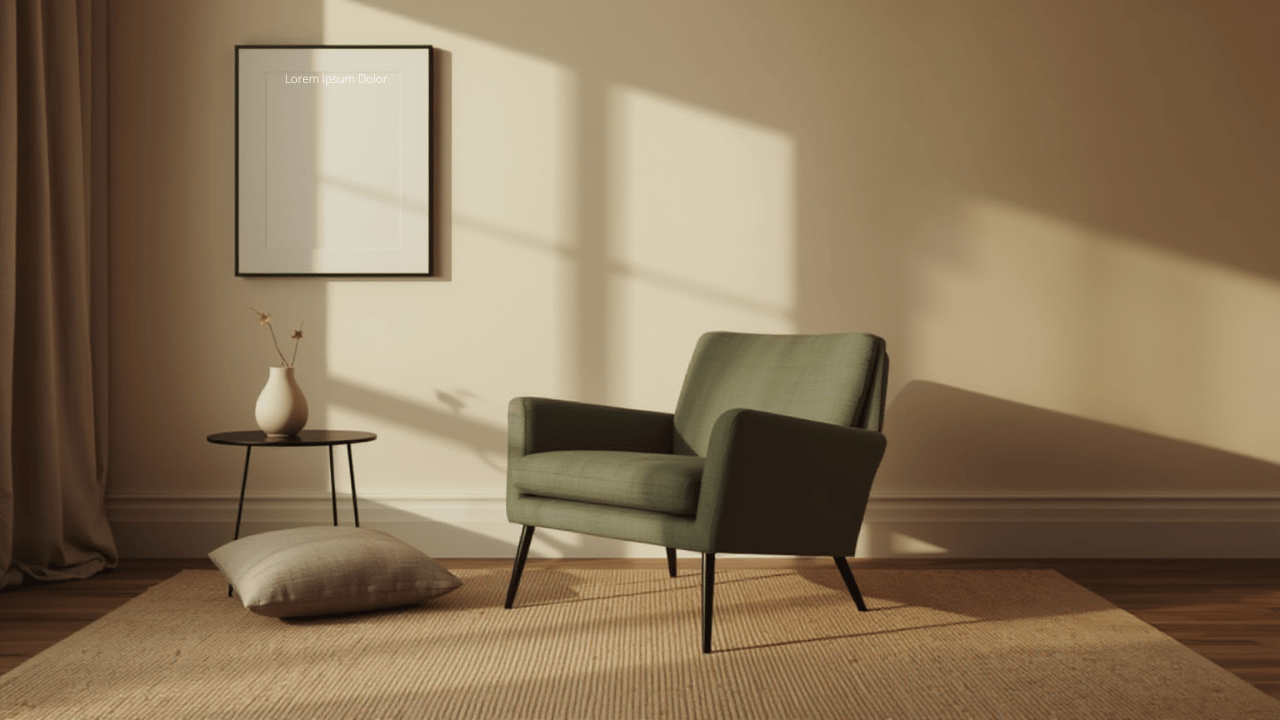
A perfectly ordinary section of floor where a chair used to sit.
Nothing had happened there.
No crime had been committed. Nobody had disappeared. There was no yellow tape around it.
Yet every time I walked into the living room, my eyes went straight to that spot.
The chair was gone.
Well, not gone gone.
If you read Series 2, you know I had not sold it. I had not returned it. I had not donated it to someone who would send me photographs every Christmas proving it had found a better family.
I had simply moved it.
Out of the living room.
Out of sight.
Out of the daily argument between what I knew and what I was still trying to convince myself was true.
And for the first few hours, I felt relieved.
The room breathed.
I breathed.
Everything seemed lighter.
Then something unexpected happened.
I started missing it.
Not the chair.
The space it occupied.
Or perhaps more accurately, I missed not having to decide what should come next.
That was when I discovered something nobody tells you about letting go:
Removing the wrong thing does not automatically reveal the right thing.
Sometimes all it reveals is an empty space.
And empty spaces ask uncomfortable questions.
The Morning I Nearly Bought Another Chair
On the fourth morning, I made coffee, walked into the living room and stared at the gap.
It looked unfinished.
Not bad.
Just unfinished.
And apparently, I have a deeply unhealthy relationship with unfinished things.
Within minutes, my phone was in my hand.
I wasn’t shopping.
Obviously.
I was researching.
If you’ve been following this series, you already know that whenever I use the word “researching,” somebody should probably confiscate my debit card.
I searched:
“Accent chair ideas for minimalist living room.”
Then:
“What to put in an empty living room corner.”
Then:
“Best statement chairs for modern interiors.”
And then, because history enjoys comedy:
“Timeless lounge chairs worth the investment.”
Investment.
There was that word again.
The financial vocabulary we use when we want desire to sound responsible.
Within fifteen minutes, I had found another chair.
This one was different.
Of course it was different.
The first chair had wooden legs.
This one had a swivel base.
Completely different life decision.
The first was neutral beige.
This one was warm taupe.
Practically another species.
The first chair had ruined my life.
This one, according to the product description, would “create a sophisticated focal point while enhancing everyday comfort.”
I stared at the screen.
The screen stared back.
My thumb hovered over Add to Cart.
And suddenly I laughed.
Not a dignified laugh.
The kind of laugh you make when you catch yourself doing something so predictably foolish that even you have to admire the consistency.
I had spent weeks learning to let go of a chair.
And my first instinct after creating space was to buy another one.
That was when Series 3 really began.
We Are Terrified of Empty Spaces
We say we want change.
What we usually mean is:
We want replacement.
We want to leave the wrong job—but preferably after signing the contract for the right one.
We want to end the wrong relationship—but it would be comforting to know somebody better is already waiting.
We want to abandon an old plan—but only after the new plan arrives with dates, projections and preferably a PowerPoint presentation.
We want to declutter the house—but then we immediately start shopping for “better storage solutions” for things we supposedly no longer need.
We don’t like vacancies.
Vacancies feel like failure.
An empty calendar feels unproductive.
An empty room feels unfinished.
An empty seat feels lonely.
An empty bank account definitely feels concerning, but that is a different article.
The point is this:
We are often more comfortable with the wrong thing occupying a space than with admitting we don’t yet know what belongs there.
The chair had occupied more than a physical corner.
It had occupied uncertainty.
While it was there, I didn’t have to ask what the room actually needed.
The chair had already answered.
Badly, perhaps.
But confidently.
Once I moved it, the question returned.
And this time, there was nowhere to hide it.
Then Someone Asked the Question I Didn’t Want to Hear
A friend visited.
You know the type of friend.
The dangerous kind.
The one who notices things.
She walked into the living room, stopped and looked toward the empty corner.
“Where’s the chair?”
I explained.
Not briefly.
I gave her the complete philosophical version.
Misalignment.
Premature acceptance.
Creating distance.
Learning to release good things that no longer fit.
Growth.
Clarity.
I may have used the word intentionality twice.
She listened patiently.
Then she asked:
“So what are you putting there?”
I paused.
“Nothing yet.”
She nodded.
Then came the question.
“Why does anything have to go there?”
I looked at her.
She looked at me.
I looked at the empty space.
And suddenly I disliked both of them.
Because I had never considered that possibility.
What if the space wasn’t waiting to be filled?
What if it was supposed to remain space?
The Lie of Immediate Replacement
There is a lie hidden inside modern life:
Every absence is a problem to solve.
We are trained to optimize.
Fill the gap.
Use the corner.
Monetize the spare time.
Develop the unused land.
Turn the hobby into a business.
Turn the business into a brand.
Turn the brand into content.
Turn the content into a course.
Turn the course into a community.
Apparently, nothing is allowed to simply exist anymore.
Even rest needs a productivity justification.
“I am resting so I can perform better tomorrow.”
What if you’re just tired?
What if the room simply needs breathing space?
What if the season after letting go isn’t supposed to produce anything?
That possibility disturbed me more than the chair ever had.
Because the chair had revealed my impulsiveness.
The empty space revealed my impatience.
And impatience is harder to photograph.
So I Conducted an Experiment
For thirty days, I decided I would put nothing in the empty corner.
No chair.
No lamp.
No plant.
No sculptural side table with a book strategically placed on it that nobody was ever allowed to read.
Nothing.
This sounds easy.
It was not.
On Day 2, I saw a beautiful floor lamp online.
On Day 5, somebody sent me a photograph of an oversized indoor plant.
“You need this,” the message said.
Need.
Interesting word.
On Day 8, I moved a side table into the space.
I stood back.
It looked good.
Then I remembered the experiment and moved it back.
On Day 11, I began wondering whether a console table technically counted as filling the space.
This is how humans negotiate with themselves.
We create a rule and immediately begin looking for loopholes.
By Day 14, something changed.
I stopped noticing the emptiness.
By Day 18, I started appreciating it.
By Day 23, I couldn’t imagine why I had ever thought something had to be there.
And on Day 27, the first genuinely strange thing happened.
I went looking for the original chair.
The Chair Had Changed
Obviously, it hadn’t.
Chairs are notoriously resistant to personal development.
It was exactly where I had left it.
Same upholstery.
Same wooden legs.
Same calm confidence that had once whispered, You deserve better.
I stood in front of it.
And something felt different.
I didn’t want it back.
But I didn’t resent it either.
For the first time, I could see it without needing it to justify itself.
It was simply a chair.
A good chair.
A beautiful chair.
A chair I had bought for the wrong reasons.
And suddenly I understood something that had escaped me through Series 1 and Series 2:
Sometimes the thing doesn’t need to change. You do.
The chair hadn’t become less beautiful.
My relationship with it had changed.
I no longer needed it to prove that I had taste.
I no longer needed it to make the room look complete.
I no longer needed it to represent the person I hoped I was becoming.
It had lost its job.
And strangely, that made it easier to appreciate.
Then the Doorbell Rang
This is where things became complicated.
A relative had come by.
We talked.
We had coffee.
Eventually, they noticed the chair in the other room.
“Oh, that’s beautiful.”
I smiled.
“Take it.”
They laughed.
I didn’t.
“No, seriously. Take it.”
There was a pause.
You would think I had offered them a kidney.
“You don’t want it?”
And there it was.
The question.
Not:
“Do I want it?”
But:
“Why don’t you want it?”
That tiny difference exposed another lie.
We often assume that if someone releases something valuable, something must be wrong with it.
But value and suitability are not the same thing.
A wonderful opportunity can be wrong for you.
A respectable career can be wrong for you.
A perfectly decent relationship can reach its natural end.
A beautiful home can become too large.
A successful business model can outlive its usefulness.
A chair can be excellent.
And still belong somewhere else.
“I don’t need it anymore,” I said.
The words surprised me.
Need.
There was that word again.
Except this time, I was using it differently.
But I Didn’t Give It Away
Not that day.
Because just as they reached for their phone to arrange transport, something inside me tightened.
“Actually,” I said, “give me a day.”
They raised an eyebrow.
I had just delivered an unsolicited TED Talk about releasing things and then asked for twenty-four hours to release a chair.
Personal growth is humiliating like that.
That evening, I sat beside the chair.
Not in it.
Beside it.
And began remembering.
The day it arrived.
The ridiculous shopping cascade.
The rug.
The lamp.
The cushions.
The compliments.
The financial regret.
The evening I first realized I wasn’t buying furniture; I was buying a feeling of arrival.
Then came the discomfort.
Then the distance.
Then the empty space.
And suddenly I wondered:
If I give the chair away, am I releasing the object—or trying to erase the evidence?
That question kept me awake longer than I care to admit.
Letting Go Can Become Another Performance
We talk about letting go as though it is automatically mature.
Sometimes it is.
Sometimes it isn’t.
Sometimes keeping something is fear.
Sometimes discarding it is fear wearing minimalist clothing.
We can become so determined to prove that we have “moved on” that we start throwing away anything associated with our former selves.
Old clothes.
Old photographs.
Old friendships.
Old ambitions.
Old versions of ourselves.
We call it cleansing.
Closure.
Reinvention.
But what if growth isn’t always about destroying evidence?
What if maturity is being able to look at an old mistake without needing to hide it?
That chair represented a foolish decision.
But it also represented a lesson.
And I suddenly wasn’t sure whether giving it away was freedom—
or avoidance.
That distinction mattered.
The Chair Went Back Into the Living Room
I know.
After two entire articles about releasing the chair, I put it back.
Please control your disappointment.
But I put it somewhere different.
Not in its old corner.
Not as the focal point.
Not where the room had to reorganize itself around it.
I placed it near the window.
Then I sat down.
And something extraordinary happened.
Nothing.
No revelation.
No choir.
No deep emotional breakthrough.
I simply sat in a chair.
For the first time since buying it, the chair wasn’t a symbol of success, regret, self-care, premature acceptance, growth, discomfort or existential furniture-related crisis.
It was furniture.
And perhaps that was the breakthrough.
Three Days Later, It Was Gone
Not stolen.
Although that would have made Series 3 much easier to market.
My relative came back.
This time I didn’t hesitate.
“Still want it?”
“Yes.”
“Take it.”
And they did.
I watched it leave through the same doorway it had entered months earlier.
There was no sadness.
No triumph.
No dramatic sense of closure.
Just a strange calm.
Then the delivery vehicle disappeared.
I walked back into the living room.
The corner was empty again.
But now it didn’t look unfinished.
It looked available.
There is a difference.
Empty says something is missing.
Available says something is possible.
That distinction changed everything.
Then I Found the Receipt
Two weeks later, while clearing a drawer, I found the original receipt.
I almost threw it away.
Then I noticed the date.
Tuesday.
The harmless Tuesday from Series 1.
The day I had gone online for “inspiration.”
I smiled.
Then I saw something else.
Under the chair was another item.
A small item.
Something I had completely forgotten about.
Purchased the same day.
Delivered separately.
Still unopened.
I stared at the description.
And laughed.
Because apparently the chair had not started this story alone.
There had been another purchase.
Another “investment.”
Another thing bought for the imaginary future version of myself.
And unlike the chair, this one had been hiding quietly for months.
I found the package at the back of a cupboard.
Still sealed.
I carried it into the living room and placed it on the floor.
For several minutes, I didn’t open it.
Because suddenly I understood something unsettling:
The chair wasn’t the pattern.
It was merely the first pattern I noticed.
And that is perhaps the most mind-bending part of self-awareness.
Once you finally recognize one lie you tell yourself, you begin hearing echoes of it everywhere.
We Don’t Repeat Decisions. We Repeat Needs.
We like to think our mistakes are isolated events.
“I bought the wrong chair.”
“I chose the wrong job.”
“I trusted the wrong person.”
“I spent too much.”
“I stayed too long.”
But repeated patterns rarely come from repeated circumstances.
They come from repeated needs.
The need to feel secure.
The need to look successful.
The need to be chosen.
The need to prove something.
The need to avoid uncertainty.
Change the object, and the need can remain untouched.
You can sell the chair and buy a car.
Leave the job and recreate the same problem in another company.
End one relationship and choose the same dynamic with a different face.
Move to another city and discover that somehow your old life packed itself into your suitcase.
That realization was uncomfortable.
Because it meant letting go of the chair had not solved anything by itself.
It had simply given me enough silence to hear the deeper question:
What was I actually trying to become when I bought it?
The Most Dangerous Version of You
I used to think our past selves caused the most trouble.
I’m no longer sure.
Sometimes the most expensive person in your life is your future imaginary self.
The person you believe you are about to become.
They have excellent taste.
They wake up early.
They read difficult books.
They entertain guests effortlessly.
They wear the clothes currently sitting untouched in your wardrobe.
They use the exercise equipment.
They cook with the kitchen gadget.
They sit elegantly in the expensive chair drinking beverages you do not currently drink.
And we keep buying things for them.
Committing for them.
Scheduling for them.
Sometimes even choosing careers and relationships for them.
Meanwhile, the present version of us is standing quietly in the background asking:
“Could somebody please consult me?”
There is nothing wrong with aspiration.
But aspiration without honesty becomes theatre.
And theatre is expensive.
I had spent money furnishing a character.
The Box Was Still on the Floor
I had almost forgotten about it.
The second purchase.
Still unopened.
I sat on the floor beside it.
Part of me wanted to tear it open immediately.
Another part wanted to return it unopened.
Both reactions felt suspiciously familiar.
Act now.
Resolve discomfort.
Fill the gap.
Finish the story.
But perhaps that was precisely the lesson.
Not every question requires an immediate answer.
So I left the box closed.
For one night.
Then two.
Then a week.
And something unexpected happened.
I stopped being curious about what was inside.
Instead, I became curious about why I had bought it.
That was a much more dangerous question.
Maybe Growth Is Not What We Thought
Perhaps growth isn’t becoming someone new.
Perhaps it is becoming less willing to abandon yourself for an imagined version of who you think you should be.
Perhaps maturity isn’t knowing exactly what belongs in every empty space.
Maybe it is being able to leave some spaces unanswered.
Maybe progress isn’t replacing everything you release.
Maybe sometimes progress looks like:
An empty corner.
An unopened box.
A cancelled plan.
A quiet calendar.
A sentence that ends without an immediate next chapter.
And the confidence to say:
“I don’t know yet.”
Those four words would have saved me a remarkable amount of money.
What the Chair Actually Ruined
So did the chair ruin my life?
No.
Of course not.
That was always the joke.
But it ruined something.
It ruined my ability to pretend that every decision I defended was a decision I still believed in.
It ruined the comfortable story that buying something meant I needed it.
It ruined the assumption that letting go meant failure.
And finally, it ruined my habit of believing that every empty space required immediate filling.
For that, strangely, I am grateful.
The chair left.
The room remained.
And so did I.
Only now, when I look at an empty space, I don’t immediately ask:
“What should I put there?”
I ask:
“What happens if I leave it alone?”
That question has become far more useful.
And considerably cheaper.
But There’s Still the Box
I wish I could end Series 3 there.
Cleanly.
Wisely.
With the chair gone, the lesson learned and the living room finally at peace.
Unfortunately, there is still a box in my house.
The forgotten purchase from that original Tuesday.
Still sealed.
And yesterday, I finally decided to open it.
I cut through the tape.
Folded back the cardboard.
Removed the packaging.
Then I stopped.
Because what I found inside made me realize that I had remembered the beginning of this entire story incorrectly.
The chair wasn’t my first impulsive decision that day.
It was the second.
And the first one?
That decision had consequences I was still living with.
I just hadn’t connected them yet.
Until now.
Reader Question
What empty space in your life are you rushing to fill—and what might happen if you left it empty long enough to understand what it is trying to teach you?
And perhaps the harder question:
Are you building your life for who you genuinely are becoming—or buying, committing and performing for an imaginary future version of yourself?
Think about that before answering.
Because sometimes the thing that needs changing isn’t what is sitting in the room.
It’s the person deciding what must go there.
To Be Continued on HOGDigest
Series 4 will begin with the box.
Not with what I bought.
With why I bought it.
Because the chair taught me about impulse.
The empty space taught me about patience.
But the unopened box?
It is about something much more difficult:
the promises we quietly make to our future selves—and what happens when that future arrives and we are still someone else.
And yes…
I will tell you what was inside.
But first, you may want to look around your own house.
There might be a box somewhere too.
To be continued.