

More homeowners are rethinking what actually goes into their living spaces this year — swapping synthetic, chemical-heavy items for options that are gentler on their families and on the planet. If you’re just starting that shift, it helps to have a reliable starting point: an eco-friendly household products directory that lists hundreds of vetted brands making everything from plant-based cleaners to biodegradable kitchenware is worth bookmarking before you buy anything new, since it saves you from having to fact-check every brand’s claims yourself. Read more about dining furniture.
The tricky part isn’t wanting a greener home — it’s knowing where to start. Furniture, textiles, and household goods all carry hidden environmental costs, from the chemicals in cleaning sprays to the synthetic foams packed into sofas. The good news is that you don’t need to overhaul your entire home at once. A room-by-room approach makes the switch to sustainable household products manageable, and it lets you prioritize the swaps that matter most for your health and budget.
Why Eco-Friendly Household Products Matter More Than Ever
“Eco-friendly” gets used loosely, but genuine sustainable household products have several key characteristics: they’re made with natural or responsibly sourced materials, they avoid harsh synthetic chemicals, and they’re designed to break down safely rather than sit in a landfill for centuries. Beyond the environmental angle, there’s a practical health reason to care — many conventional cleaning products and air fresheners release volatile organic compounds (VOCs) that linger indoors, where air quality is often worse than outside. Choosing natural cleaning products and low-VOC finishes isn’t just a values statement; it’s a direct upgrade to the air your household breathes every day.
Living Room: Start With What You Touch Most
Your living room sees the most daily wear, so it’s a good place to prioritize durability alongside sustainability. Look for upholstered furniture using natural fibers like organic cotton, linen, or wool rather than fully synthetic blends, and check whether cushion fill is a natural latex or a certified low-emission foam. Wooden furniture frames should ideally carry FSC (Forest Stewardship Council) certification, which confirms the wood came from responsibly managed forests rather than unregulated logging. If you’re refreshing decor rather than replacing furniture outright, swap synthetic candles and air fresheners for soy or beeswax candles and essential-oil diffusers — a small change that noticeably improves indoor air quality.
Kitchen: Where Chemicals and Waste Add Up Fastest
The kitchen is arguably the highest-impact room to green up, because it combines two problem areas: cleaning chemicals and single-use waste. Eco-dishwashing detergents made from plant-based surfactants clean just as effectively as conventional formulas without leaving chemical residue on dishes. Swapping paper towels for washable cotton cloths, and plastic wrap for beeswax food wraps or reusable silicone lids, cuts down on daily waste without much adjustment to your routine. When it comes to cookware, cast iron, stainless steel, and ceramic-coated pans are more sustainable long-term choices than nonstick coatings that degrade and need frequent replacement.
Bedroom and Bath: Materials Against Your Skin
Because you spend roughly a third of your life in it, your bedroom deserves particular attention to material quality. Organic cotton or linen bedding, free of the formaldehyde-based finishes used to keep conventional sheets wrinkle-free, is a straightforward upgrade. In the bathroom, natural laundry detergents and fabric softeners reduce the amount of synthetic fragrance and chemical residue that stays on clothing and bedding against your skin. Bar soaps and shampoo bars with minimal, recognizable ingredient lists also cut down dramatically on plastic bottle waste compared to their bottled equivalents.
Garden and Outdoor Spaces
Outdoor furniture and garden products are exposed to weather, which means finishes matter even more. Look for outdoor furniture treated with natural oils rather than synthetic sealants, and avoid pressure-treated wood that relies on chemical preservatives if you have kids or pets who’ll be in close contact with it. For garden care itself, natural pest deterrents and organic fertilizers protect the soil health that everything else in your yard depends on.
The Cleaning Cabinet: The Easiest Room-Wide Win
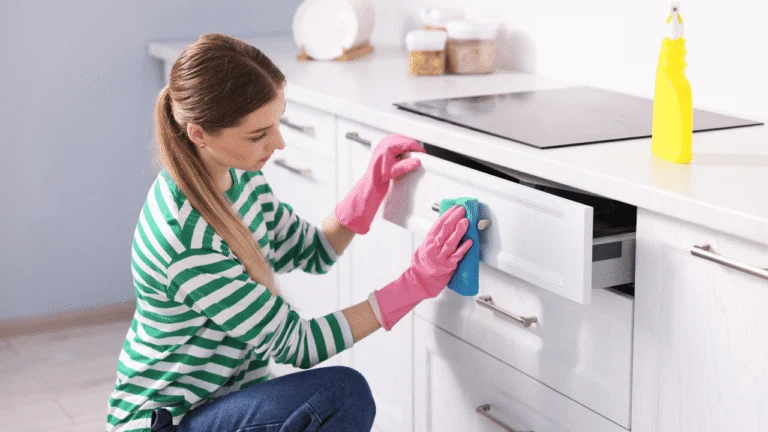
If you tackle nothing else this year, start here. Replacing your all-purpose cleaner, glass cleaner, and bathroom cleaner with plant-based, biodegradable formulas is one of the highest-impact, lowest-effort changes you can make, because these products get used in every room, every week. Look for ingredient transparency — brands that list exactly what’s inside rather than hiding behind “proprietary formula” — as a general marker of a company that’s not cutting corners elsewhere either.
Budgeting the Switch Without Overspending
Sustainable household products often carry a higher price tag than their conventional counterparts, which is the most common reason people stall on making the switch. The trick is sequencing: replace items as they naturally run out or wear out rather than throwing away perfectly usable conventional products to replace them immediately. Concentrated cleaning formulas, refillable containers, and buying in bulk from directories of vetted eco brands typically bring the per-use cost down close to — or below — mainstream alternatives over time.
Home Office: Often Overlooked
With more people working from home at least part of the week, the home office deserves the same scrutiny as any other room — yet it’s usually the last place anyone thinks to green up. Look for desks and shelving built from FSC-certified wood or reclaimed materials rather than particleboard laminated with synthetic veneers, which off-gas for years in a room you likely spend eight hours a day in with the door closed. Task chairs upholstered in natural fabrics, and finished with water-based rather than solvent-based lacquers, make a real difference to the air quality in a space with limited ventilation. Even small additions — a plant that helps filter indoor air, or a desk lamp with an energy-efficient LED rather than an incandescent bulb — add up in a room where the lights and equipment tend to run for hours on end.
Where to Find Brands You Can Actually Trust
The hardest part of any of this isn’t the will to change — it’s verifying that a product labeled “green” or “natural” actually is. Marketing language is unregulated in most markets, so a searchable, filterable directory of household product manufacturers, complete with company details and product categories, takes a lot of the guesswork out of shopping. It’s a far more efficient way to compare options than scrolling through dozens of individual brand websites, each making similar claims with varying degrees of honesty.
Building a genuinely eco-friendly home doesn’t happen overnight, and it doesn’t need to. Start with the cleaning cabinet, move room by room as items naturally need replacing, and lean on resources built specifically to separate real sustainability from marketing spin. Your home — and the air inside it — will be better for it.