
Dust under a sofa is not difficult because dust behaves differently there. It is difficult because the space is hard to reach. The same is true beneath beds, dressers, cabinets, entertainment units, and other large pieces. You may clean open flooring regularly, but a strip only a few inches farther underneath can go untouched simply because the vacuum head, mop, or hand can’t reach it.
That makes under-furniture cleaning less about frequency and more about access. Before deciding every large piece needs to be moved, it helps to understand what you can reach safely, what you can reach with a better tool, and what should wait for a deeper cleaning session.
Start With the Clearance, Not the Dust
Look at how much space exists between the furniture and the floor. A sofa with several inches of clearance may allow a low-profile vacuum attachment to reach most of the area beneath it. A platform bed sitting close to the floor creates a different problem. The furniture may cover a large area while leaving only a narrow opening around the edges. Read more about cleaning details and tips.
In that case, the first goal is not moving the bed.
It is determining how far an appropriate tool can reach from each side. Clearance tells you what kind of cleaning is realistic.
Furniture Edges Usually Collect the Most Visible Debris
Hair, crumbs, and dust often gather close to the outer edge before travelling farther underneath. That makes the first few inches important.
Run a suitable tool along the front and sides of the furniture before worrying about the hidden center. You may find that most of the visible buildup is concentrated there.
This is especially common around sofas, beds, and storage furniture that sit in rooms with regular foot traffic. Keeping the perimeter clear can prevent those edges from becoming obvious dust lines even if the deepest area is cleaned less frequently.
Use the Right Tool Before Moving Anything
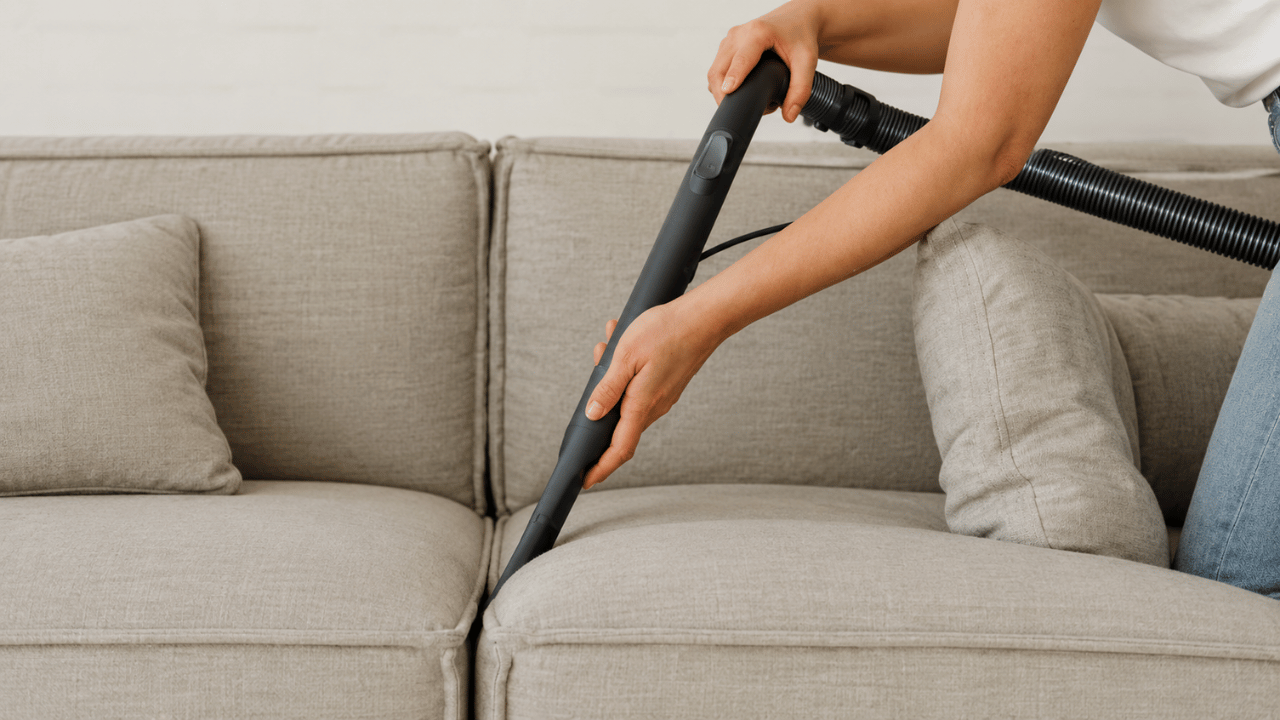
A furniture move should not be the automatic first step. Try extending the reach instead. A low-profile vacuum head, crevice attachment, flexible dusting tool, or long-handled floor tool may reach areas that seem inaccessible from standing height.
Approach from more than one side if possible.
A bed that cannot be reached fully from the foot may be accessible from both sides. The goal is to improve coverage without turning routine cleaning into a furniture-moving exercise.
Beds Create Large Hidden Zones
Beds can conceal one of the largest floor areas in a bedroom.
They also create several different access conditions.
There may be open clearance at the sides, storage boxes underneath, a solid frame extending almost to the floor, or a center section that no ordinary attachment can reach.
Treat these situations differently.
If storage is present, remove only what must move for access.
Do not automatically reorganize everything beneath the bed.
Clean the exposed floor, check the edges, and return the stored items once the area is ready.
Sofas Add Crumbs to the Dust Problem
Beds mainly collect dust, hair, and fabric fibers underneath.
Sofas can add food debris.
Crumbs fall between cushions and may eventually reach the floor. Small objects can disappear beneath the frame. Pet hair often gathers along the front edge and around the legs.
Start by checking the cushions and seat gaps.
If debris remains above the floor, clean that first so it does not fall onto a section you have already finished.
Then move downward to the floor beneath and around the sofa.
The sequence reduces repeat work.
Heavy Furniture Needs a Safety Limit
Some pieces should not be shifted casually.
Large wardrobes, loaded bookcases, heavy entertainment units, and substantial dressers can be awkward or unstable.
Trying to move them simply to reach a narrow strip of flooring may create more risk than the cleaning task justifies.
If furniture is anchored, connected to equipment, or difficult to lift safely, leave it in place.
Focus on the accessible perimeter.
A hidden section does not need to become an injury risk.
Wheels and Sliders Change the Equation
Furniture designed to move is different.
A small cart, rolling storage unit, or lightweight table may be easy to reposition temporarily.
If it moves safely, use that access.
Clean underneath before returning it.
The same idea can apply to lighter furniture equipped with appropriate sliders, provided the flooring and furniture can tolerate the movement.
The point is not to move everything.
It is to take advantage of access where movement is simple and low-risk.
Storage Under Furniture Can Create a Second Barrier
Under-bed bins and low baskets solve storage problems but complicate cleaning.
Dust can collect around their edges and beneath them.
Instead of emptying every container, remove them as complete units where practical.
Place them temporarily in one area, clean the exposed floor, then return them.
This keeps the cleaning job separate from organizing.
The contents do not need to be sorted simply because the floor underneath needs attention.
Furniture Placement Can Make Future Cleaning Easier
Access problems can sometimes be reduced before the next cleaning session.
If a lightweight piece sits so close to a wall that no tool can reach beside it, a slight repositioning may create a usable gap.
If several storage bins are scattered beneath a bed, grouping them can make the remaining floor easier to reach.
Small layout choices can improve cleaning access without changing how the room functions.
The best arrangement considers both daily use and future maintenance.
Different Pieces Need Different Cleaning Intervals
The floor beneath a dining table may need frequent attention because chairs move and crumbs fall regularly.
The center beneath a heavy dresser may change very slowly.
Those areas do not belong on the same schedule.
Use exposure and activity as guides.
Frequently disturbed edges deserve more regular attention.
Deep hidden zones can often wait for periodic access, especially if the furniture rarely moves and little debris reaches the area.
This keeps effort proportional to the actual buildup.
Access Should Define the Scope Before Work Begins
A useful under-furniture plan separates easy reach, limited reach, and no safe reach.
That distinction matters during North County San Diego House Cleaning visits as well: clearance beneath a sofa, the weight of a dresser, storage under a bed, and the available approach from each side can determine which hidden areas belong in normal floor care and which require a more involved session.
The furniture itself is not automatically the cleaning problem.
Its relationship to the surrounding space is.
Moving Day Is an Opportunity for Hidden Floors
One of the best times to clean deeply beneath large furniture is when it is already being moved.
If a bed, sofa, dresser, or bookcase is leaving the room for rearranging, replacement, repairs, or a move, use the temporary access.
Clean the newly exposed floor and baseboard before anything returns.
This avoids shifting a heavy piece solely for cleaning.
It also reaches areas that may not become accessible again for a long time.
Look for More Than Loose Dust
Once a hidden area is exposed, inspect before cleaning aggressively. You may find dust and hair, but you may also see floor discoloration, scratches, furniture impressions, or changes caused by reduced sunlight.
Not every difference is removable dirt.
Clean appropriately for the flooring material first. If a mark remains, consider whether it reflects wear or material change rather than residue.
Repeated scrubbing will not repair physical damage.
Finish the Open Floor After the Hidden Areas
If under-furniture cleaning is part of the session, handle it before finishing the main floor. Pull dust and debris out from hidden edges first.
Clean beneath any lightweight pieces that are being moved. Return furniture or storage to its position. Then complete the open flooring. This order prevents dust retrieved from underneath furniture from spreading across a surface that was already finished.
Access Changes the Definition of “Clean”
A room can have a clean open floor while still holding dust beneath large furniture.
That does not mean every sofa, bed, and dresser needs to move every week. It means the hidden floor needs its own plan. Check the clearance. Use tools that extend reach. Clean the accessible perimeter more often, take advantage of easy furniture movement, and reserve difficult areas for moments when safe access becomes available.
Under-furniture cleaning is rarely a question of effort alone. Most of the time, it is a question of whether the floor can actually be reached. Solve the access problem first, and the cleaning decision becomes much clearer.